Bareilly to Delhi Travel Planning: Road Conditions, Safety & Journey Tips
Travelling between Bareilly and Delhi travel planning is a common requirement for people visiting the national capital for business meetings, education, medical appointments, shopping, family gatherings, and airport transfers. Although the journey is manageable within a few hours under suitable conditions, careful planning can make the experience considerably more comfortable.
A well-planned road journey involves more than choosing a route. Travellers should consider departure time, weather, traffic, luggage, refreshments, passenger comfort, and the arrangements needed after reaching Delhi.
This travel planner covers the essential things to know before travelling from Bareilly to Delhi, helping individuals and families prepare for a smoother and more organised trip.
1. Preparing for Your Journey from Bareilly
Before leaving Bareilly, identify your destination and estimate how much time you will need to reach it. Delhi is a large metropolitan area, so travelling to an office in central Delhi is different from reaching an airport, a residential neighbourhood, or a business district in NCR.
The journey commonly covers approximately 250–270 km by road, depending on the selected route and the exact starting and ending points. Under typical conditions, travellers may need around 4.5–6 hours of driving time, although congestion, weather, and breaks can extend the journey.
Begin by confirming the following details:
- Your exact pickup address in Bareilly
- Your destination address in Delhi or NCR
- Your preferred departure time
- The number of passengers travelling
- The amount of luggage you will carry
- Any fixed appointment, check-in, or reporting time
Having these details ready makes it easier to choose an appropriate travel arrangement and estimate the time required.
2. Bareilly to Delhi Travel Planning: Understanding the Road Corridor Between
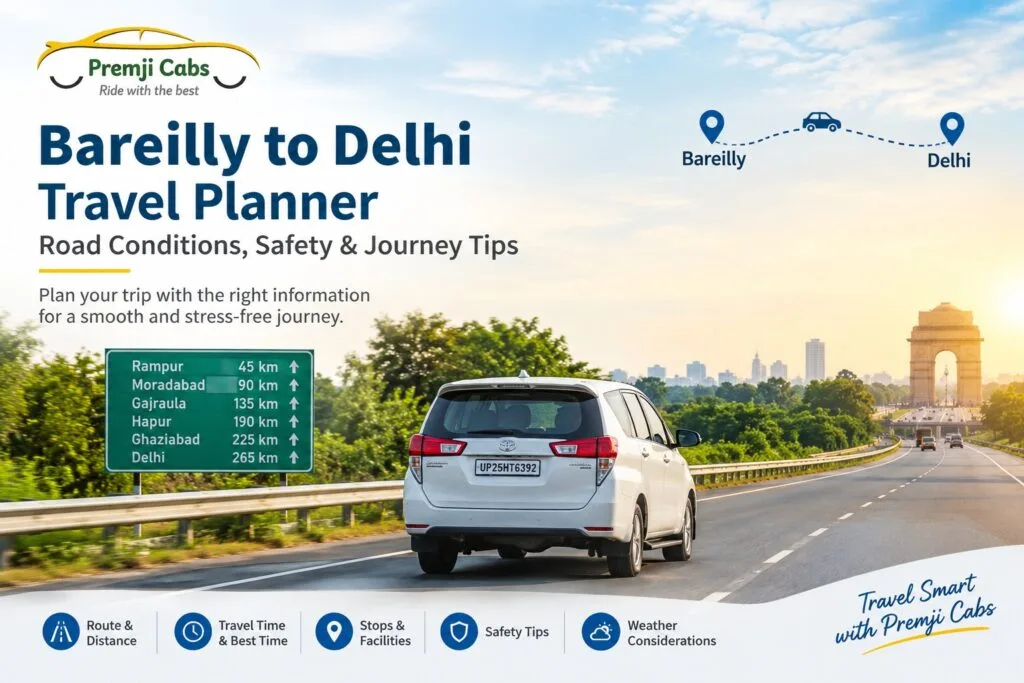
One of the commonly used routes connects Bareilly with Delhi through the highway corridor around Rampur, Moradabad, Gajraula, Hapur, and Ghaziabad.
The route generally uses NH 9 and connecting roads, although navigation applications may recommend different approaches depending on the destination and current traffic.
Rather than relying entirely on a previously saved route, check a live map before departure. Temporary diversions, roadworks, congestion, and changes in traffic conditions may influence the most practical option.
Why checking the route matters
The shortest route displayed on a map is not always the fastest route at a particular time. A slightly longer route may sometimes be preferable if it avoids significant congestion, but the decision should be based on current navigation information.
If you are travelling to an unfamiliar location, save the destination address and review the final approach before starting. This is particularly useful when heading to a hospital, office complex, hotel, railway station, or airport.
3. Choosing a Suitable Departure Time
Your departure time can influence the overall experience, especially when travelling to Delhi for an appointment or connecting journey.
When you have a morning appointment
For an early appointment, work backwards from the required arrival time. Include the estimated driving duration, time for possible traffic delays, and a buffer for finding the destination or completing entry formalities.
Avoid planning your departure around the minimum journey time shown by a navigation application.
When travelling during the afternoon
An afternoon journey may be convenient for travellers with flexible schedules. However, congestion around urban approaches can affect arrival times, particularly when the destination is in a busy commercial or residential area.
When travelling during the evening
If your trip continues into the evening, check the expected traffic near your destination. Commuter traffic may affect the final part of the journey even when the highway section is moving smoothly.
When your schedule is flexible
Travellers without a fixed appointment have more freedom to select a departure time that suits their personal routine. Even so, weather forecasts and live traffic information should remain part of the planning process.
4. What Road Conditions Should You Expect?
Road conditions can change throughout the year. Preparing for the likely conditions is particularly important on a journey that combines highway driving with busy urban roads.
Traffic around towns and junctions
The journey passes through or near several developed towns. Traffic may become slower near junctions, market areas, highway entrances, and connecting roads.
Allow for occasional delays rather than assuming that the entire route will have uninterrupted highway movement.
Roadworks and diversions
Maintenance work or temporary diversions may affect the route. Check current navigation information before leaving and follow official traffic signs whenever they differ from your saved directions.
Highway driving
Long stretches of highway can make the journey feel straightforward, but drivers should remain attentive, maintain safe following distances, and observe posted speed limits.
Passengers should also keep luggage secure and avoid distracting the driver.
5. How to Prepare for Different Weather Conditions
Weather is an important consideration when planning an intercity road journey in northern India.
Winter fog
Fog can significantly reduce visibility during winter, particularly during early mornings and late nights. Travel may take longer than usual, so avoid relying on normal driving-time estimates when visibility is poor.
If conditions become unsafe, delaying departure or stopping at a safe location may be the better decision.
Summer heat
During hot weather, carry drinking water and plan appropriate refreshment breaks. Passengers travelling with children or older family members may benefit from keeping essential items within easy reach.
Rainy weather
Rain can affect visibility, road grip, and braking distances. Allow additional time and avoid stopping on unsafe highway shoulders.
Seasonal travel periods
Festivals, school holidays, and long weekends may increase traffic between cities. If your journey coincides with a busy travel period, check conditions in advance and keep your schedule flexible.
6. Making the Journey Comfortable for Families
Families often have additional requirements when planning a road journey. Children, older passengers, and people carrying several bags may need more frequent breaks and a little extra preparation.
Consider these practical suggestions:
- Carry drinking water and light refreshments.
- Keep essential medicines and personal items accessible.
- Pack children’s necessities separately from the main luggage.
- Plan breaks according to passenger comfort.
- Confirm that the chosen vehicle has sufficient seating and luggage capacity.
- Keep phones charged for navigation and communication.
- Avoid an unnecessarily tight arrival schedule.
For older passengers, consider how easy it is to enter and exit the vehicle. If anyone requires additional assistance, communicate this before confirming the travel arrangement.
Comfort depends not only on the vehicle but also on a sensible schedule and appropriate rest breaks.
7. Planning Food and Refreshment Stops
A long drive can be tiring without breaks, particularly when passengers are travelling with children or have started early in the morning.
Several towns along the general highway corridor provide opportunities to look for refreshments. Areas around Moradabad, Gajraula, Hapur, and other accessible points may be useful depending on the route and time of travel.
Before choosing a stop, check:
- Whether the establishment is currently open
- Whether it is accessible from your route
- Whether suitable parking is available
- Whether clean washroom facilities are provided
- Whether the stop adds significant time to the journey
Do not stop on a narrow shoulder or an unsafe part of the highway simply because it is convenient. Use designated stopping areas and suitable facilities.
If you are travelling to an important appointment, plan a reasonable break without leaving too little time for the final part of the journey.
8. What to Keep in Your Travel Bag
Keeping important items organised reduces the need to search through luggage during the trip.
A practical travel bag may include:
Essential documents: Identification and any documents needed for your appointment, booking, or onward travel.
Electronics: A charged mobile phone, charging cable, and power bank where appropriate.
Personal essentials: Drinking water, tissues, hand sanitiser, and any prescribed medicines you need.
Travel information: Your destination address, contact details, appointment information, and onward journey details.
Comfort items: Light refreshments or other essentials suitable for your passengers.
If you are heading to an airport or railway station, keep your ticket and departure details readily available. Confirm the terminal, station entry point, and reporting time before starting the trip.
9. Planning the Final Part of Your Journey
Reaching the Delhi region does not necessarily mean you have reached your destination. The remaining journey can vary considerably depending on the neighbourhood or locality you need to visit.
Business districts and office locations
If you are visiting an office, confirm the building address, entry arrangements, and any parking requirements. Large commercial complexes may have multiple entrances.
Hospitals and medical appointments
Allow additional time for locating the correct building or department. If your appointment is time-sensitive, discuss the arrival requirements with the relevant facility in advance.
Railway stations
Confirm the correct station and pickup or drop-off point. Major stations can have different entrances and access arrangements, so checking the location beforehand is useful.
Airport terminals
For airport journeys, verify your airline, terminal, departure time, and required reporting time. Traffic and weather can make a substantial difference to the journey, particularly during winter.
Residential areas and NCR destinations
If your final destination is in Noida, Ghaziabad, Gurugram, Faridabad, or another NCR locality, use the full destination address when checking your route. The last part of the journey may require a different approach from the one used for central Delhi.
10. Comparing Ways to Travel from Bareilly to Delhi
Different travel arrangements suit different schedules and passenger requirements.
Travelling by train
Rail travel may suit passengers who prefer a scheduled service and are comfortable travelling to and from railway stations. Check train availability, departure times, and the onward transport needed at your destination.
Travelling by bus
Buses can be a practical option for travellers who are comfortable with fixed departure points and service schedules. Consider how you will reach the boarding point and continue to your final destination.
Driving your own car
A personal vehicle provides flexibility over departure times and stops. However, the driver must manage the entire journey, navigation, fatigue, and vehicle readiness.
Arranging a private car
A pre-arranged car may suit families, business travellers, and passengers who prefer pickup and drop-off at specified addresses.
The best choice depends on your budget, luggage, passenger count, schedule, and destination. Compare the complete journey rather than considering only the time spent between the two cities.
If you are considering a private vehicle, you can review the Bareilly to Delhi travel options offered by Premji Cabs.
11. How Premji Cabs Can Fit Into Your Travel Plans
Premji Cabs provides local and outstation travel services from Bareilly for customers travelling to Delhi and other destinations.
When planning an intercity trip, passengers should confirm the pickup location, destination, date, passenger count, luggage requirements, and preferred vehicle before finalising their arrangements.
A sedan may be suitable for a smaller group with moderate luggage, while a larger vehicle such as an Ertiga or Innova Crysta may be preferable when passengers require additional space.
Before confirming a journey, clarify the total fare, tolls, parking charges, waiting arrangements, and whether the booking is one-way or includes a return trip. Confirm the vehicle and availability directly with the provider.
To learn more about the available arrangements, visit the Premji Cabs website.
12. Common Planning Mistakes to Avoid
Even a familiar intercity journey can become stressful when basic details are overlooked.
Underestimating travel time: A map estimate may not account for every delay. Allow a suitable buffer.
Using an incomplete destination: Save the exact address rather than just the city name.
Ignoring weather conditions: Fog and heavy rain can require slower, more cautious travel.
Leaving breaks unplanned: Consider passenger comfort and identify suitable stopping facilities along the way.
Overlooking luggage requirements: Confirm that the vehicle can accommodate all passengers and bags.
Failing to confirm onward travel: If you have a flight, train, or appointment, keep the reporting time and location readily available.
Not confirming the booking terms: Clarify the fare and any additional charges before travel.
Avoiding these mistakes can make your journey more predictable and reduce last-minute uncertainty.
Frequently Asked Questions
What is the approximate distance from Bareilly to Delhi?
The road distance is approximately 250–270 km on many common routes. The exact distance depends on your pickup address, destination, and selected route.
How much time should I allow for the journey?
A typical journey may require around 4.5–6 hours of driving time. Allow additional time for congestion, refreshment breaks, weather, and the final approach to your destination.
Which towns are located along the general route?
The commonly used highway corridor passes through or near Rampur, Moradabad, Gajraula, Hapur, and Ghaziabad, depending on the precise route.
How can I make a family road trip more comfortable?
Confirm adequate seating and luggage space, carry essential items, plan suitable breaks, and allow sufficient time for the journey.
Should I check traffic before leaving Bareilly?
Yes. Checking live navigation and current road conditions can help you identify congestion, diversions, and possible changes to your expected arrival time.
What should I consider when planning an airport journey?
Confirm your terminal, departure time, required reporting time, pickup address, and a suitable traffic buffer. Winter fog and congestion can increase travel time.
Where can I find travel options for this route?
You can visit Premji Cabs – taxi service Bareilly to review its intercity travel services and discuss your journey requirements before making a booking.
Conclusion
Planning a road journey from Bareilly to Delhi becomes easier when you consider the complete trip rather than focusing only on distance. Checking traffic, selecting a suitable departure time, preparing for weather conditions, organising luggage, and allowing enough time for your final destination can all improve the experience.
Whether you are travelling for business, visiting family, attending an appointment, or connecting to an onward flight, a little preparation can help you manage the journey more confidently.
For travellers considering a private car, Premji Cabs offers a starting point for exploring intercity travel arrangements from Bareilly. Confirm your requirements and booking terms before setting off, and always prioritise safe driving and realistic travel times.
Also Read: Bareilly to Delhi Travel Planner